太阳风

天文·每日一图

彗星莱蒙的飘逸尾巴

A starfield is shown above a mountain peak. Just above the mountain and extending up toward the upper right is a blue-tinted tail of a comet. The comet’s head is just to the left of the peak. Please see the explanation for more detailed information.
画面中,一座山峰上方呈现一片星空。山峰上方,向右上方延伸的是一条泛着蓝色的彗尾。彗核位于山峰左侧。有关更多详细信息,请参阅说明。

天文·每日一图

阿波罗11号:捕捉太阳

2023年7月29日 Apollo 11: Catching Some Sun Image Credit: Apollo 11, NASA (Image scanned by Kipp Teague) Explanation: Bright sunlight glints as long dark shadows mark this image of the surface of the Moon. It was taken fifty-four years ago, July 20, 1969, by Apollo 11 astronaut Neil Armstrong, the first

天文·每日一图

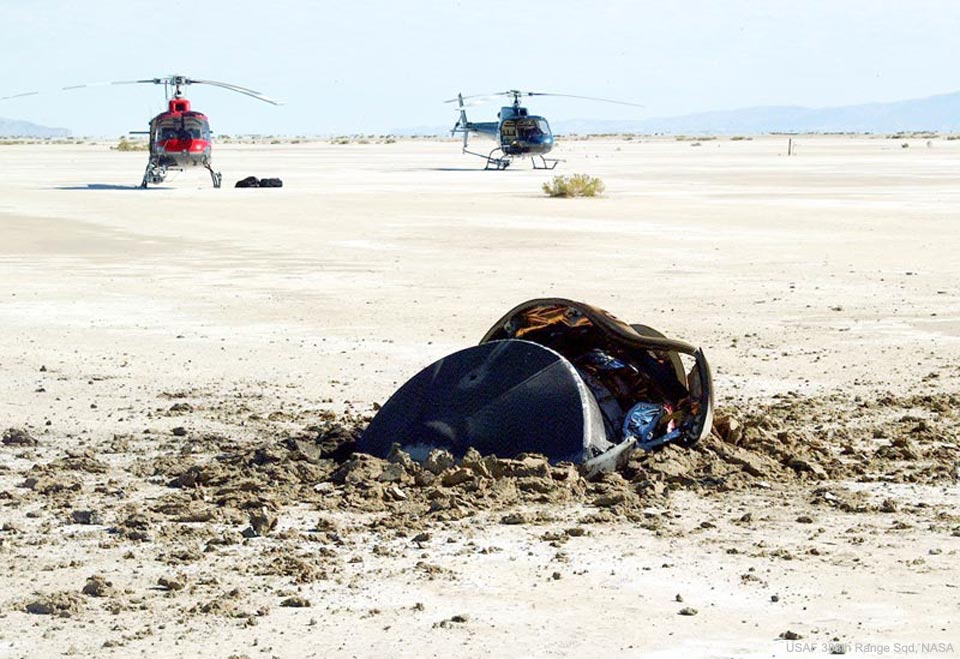
坠毁在犹他州沙漠的飞碟

2022年11月13日 Flying Saucer Crash Lands in Utah Desert Image Credit: USAF 388th Range Sqd., Genesis Mission, NASA Explanation: A flying saucer from outer space crash-landed in the Utah desert after being tracked by radar and chased by helicopters. The year was 2004, and no space aliens were involved.

天文·每日一图

李奥纳德彗星摇摆的彗尾

2022年1月10日 Comet Leonard’s Tail Wag Image Credit: NASA, NRL, STEREO-A; Processing: B. Gallagher Explanation: Why does Comet Leonard’s tail wag? The featured time-lapse video shows the ion tail of Comet C/2021 A1 (Leonard) as it changed over ten days early last month. The video was taken

天文·每日一图

帕克太阳探测器向侧面看到的景象

2019 December 9 Looking Sideways from the Parker Solar Probe Video Credit: NASA, JHUAPL, Naval Research Lab, Parker Solar Probe Explanation: Everybody sees the Sun. Nobody’s been there. Starting in 2018 though, NASA launched the robotic Parker Solar Probe (PSP) to investigate regions near to t

资讯

帕克太阳探测器的5个新发现

北京时间12月5日凌晨2时30分(美国东部时间12月4日13时30分),NASA召开媒体电话会议,宣布帕克太阳探测器首批研究成果,研究成果于12月5日凌晨2时发表在自然杂志。 帕克太阳探测器比以往任何探测器都接近太阳,意味着我们将以前所未有的方式理解太阳高能粒子和太阳风。太阳高能粒子是来自太阳的高能量粒子,对太空中的宇航员和卫星有害,太阳风是来自太阳的超高速等离子体流。以下简述下帕克太阳探测器的5个新发现。 帕克太阳探测器看到的宇宙尘埃(模拟图),在靠近太阳的地方开始变得稀少。 Credits: NASA’s Goddard Space Flight Center/Scott Wi

资讯

25年的太阳风科学研究

版权:NASA 在20世纪80年代早期,太阳物理学家想要知道如何保护宇航员以及地球周围的卫星免受狂暴的太阳风造成的潜在破坏性太空天气的影响,他们需要答案。 为了做到这一点,他们需要更好地了解地球周围不断变化的动态空间系统 – 包括测量太阳风的属性,以及太阳不断释放的带电粒子。响应这一号召的是于25年前的1994年11月1日启动的“风”任务(Wind mission)。目前,Wind卫星的运行轨道处于第一拉格朗日点L1处,这是太阳和地球之间的引力平衡点,使得航天器可以一直面向太阳。 艺术家绘制的关于25年前,Wind航天器于1994年发射升空的情形。 版权:美国国家航空航天局戈达德太

滚动至顶部