Sun

天文·每日一图

太阳西侧临边的条珥

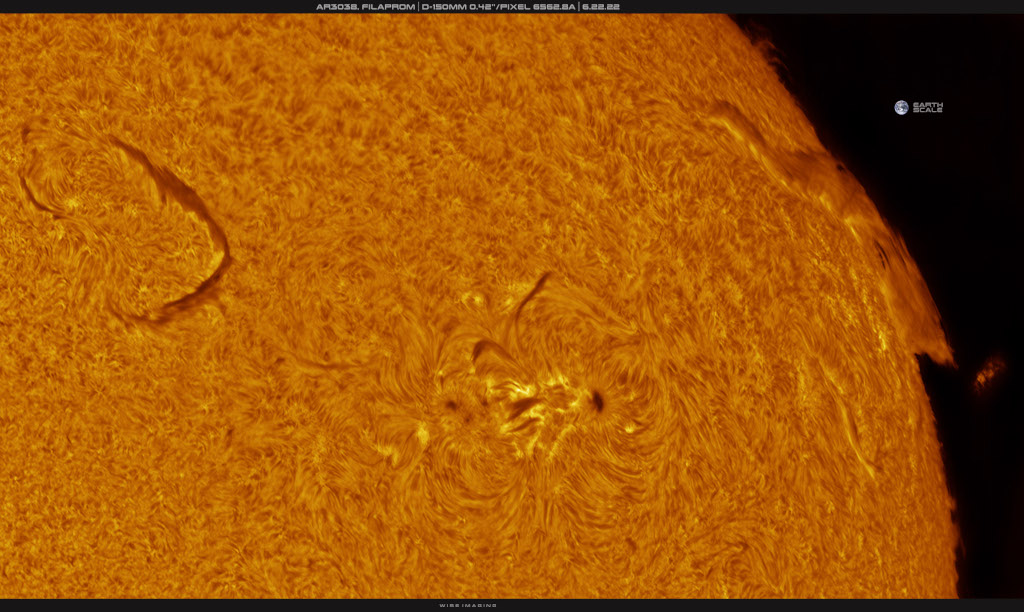
2022年6月24日 Filaprom on the Western Limb Image Credit & Copyright: Martin Wise Explanation: A solar filament is an enormous stream of incandescent plasma suspended above the active surface of the Sun by looping magnetic fields. Seen against the solar disk it looks dark only because it’s a […]

天文·每日一图

火箭凌越涟波纹身的太阳

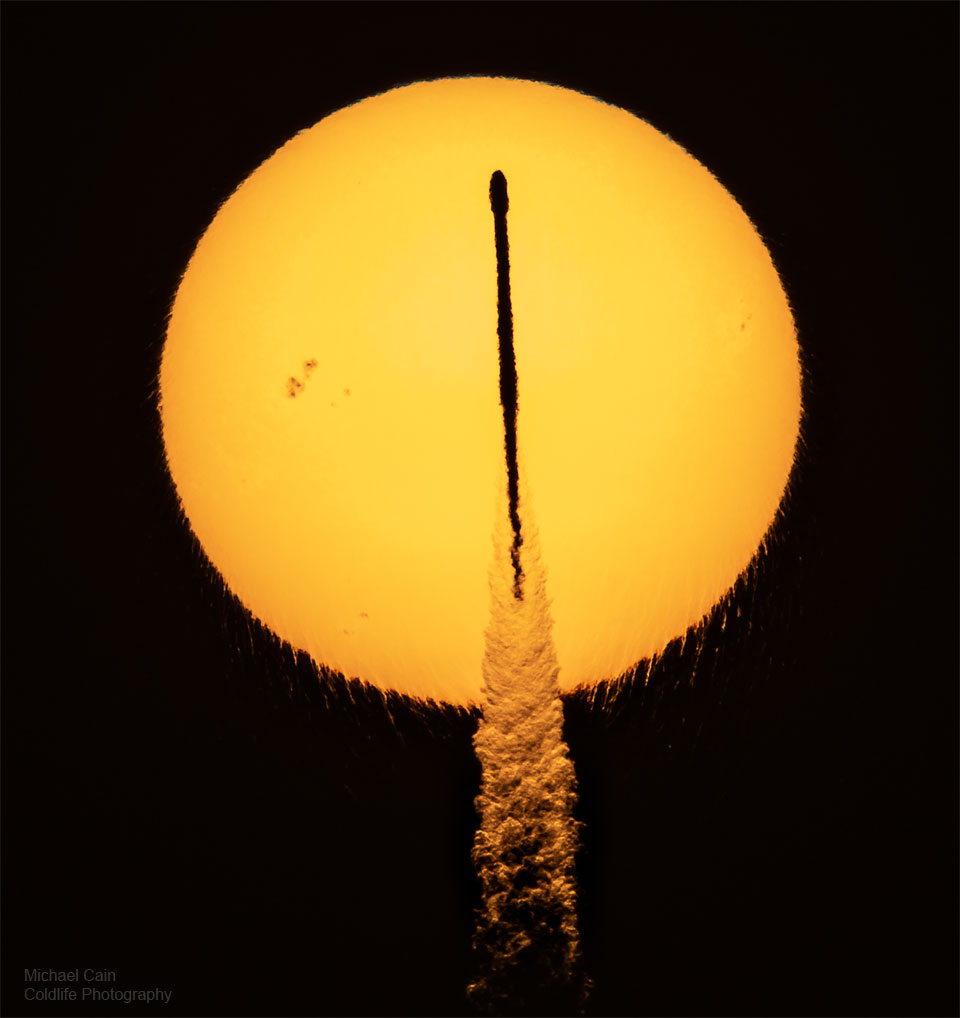
2022年5月31日 Rocket Transits Rippling Sun Image Credit & Copyright: Michael Cain Explanation: The launch of a rocket at sunrise can result in unusual but intriguing images that feature both the rocket and the Sun. Such was the case last month when a SpaceX Falcon 9 rocket blasted off from NASA&#8

天文·每日一图

太阳表面的大海啸

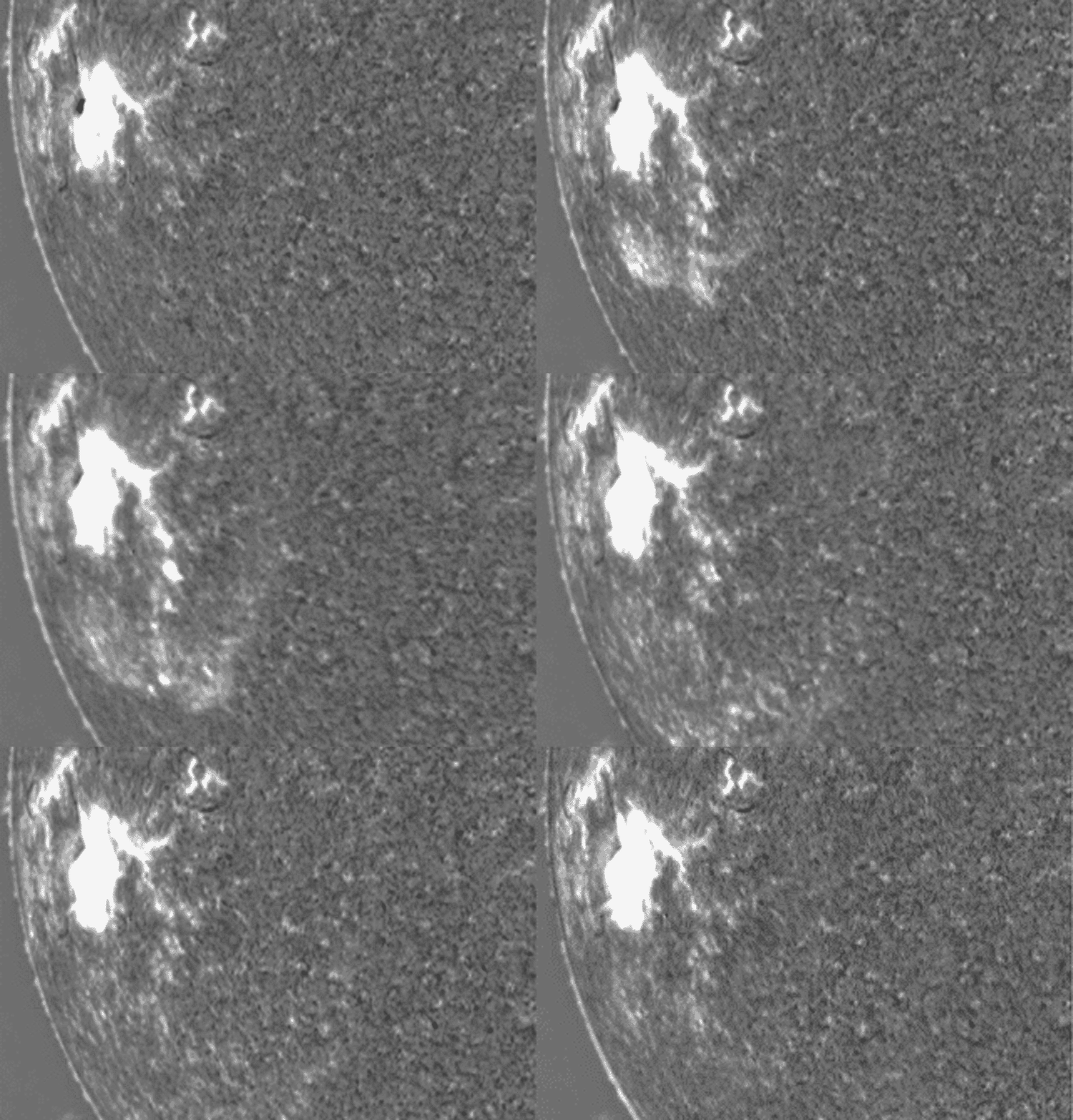
2022年5月22日 A Large Tsunami Shock Wave on the Sun Image Credit: NSO/AURA/NSF and USAF Research Laboratory Explanation: Tsunamis this large don’t happen on Earth. During 2006, a large solar flare from an Earth-sized sunspot produced a tsunami-type shock wave that was spectacular even for the Sun

资讯

NASA发现汤加火山喷发影响已达太空

2022年1月15日,洪加汤加-洪加哈帕伊火山喷发时,向全世界发出了大气冲击波、音爆和海啸波。现在,科学家们发现火山的影响也到达了太空。 通过分析来自NASA电离层连接探测器(ICON)和欧洲航天局(ESA)Swarm卫星的数据,科学家们发现,在火山爆发后的几个小时内,飓风风速和不寻常的电流在电离层(地球在太空边缘的带电上层大气层)形成。 2022年1月15日,洪加汤加-洪加哈帕伊火山爆发,造成了许多影响,其中一些在此处进行了说明,在全世界乃至太空都能感受到这些影响。其中一些影响,如极端风和异常电流,由NASA的ICON任务和ESA(欧洲航天局)的Swarm探测到。图像不按比例缩放。 影像来源

天文·每日一图

太空站凌越活跃的太阳

2022年4月11日 A Space Station Crosses a Busy Sun Image Credit & Copyright: Wang Letian (Eyes at Night) Explanation: Typically, the International Space Station is visible only at night. Slowly drifting across the night sky as it orbits the Earth, the International Space Station (ISS) can be seen as

天文·每日一图

土卫六甲烷海反射的阳光

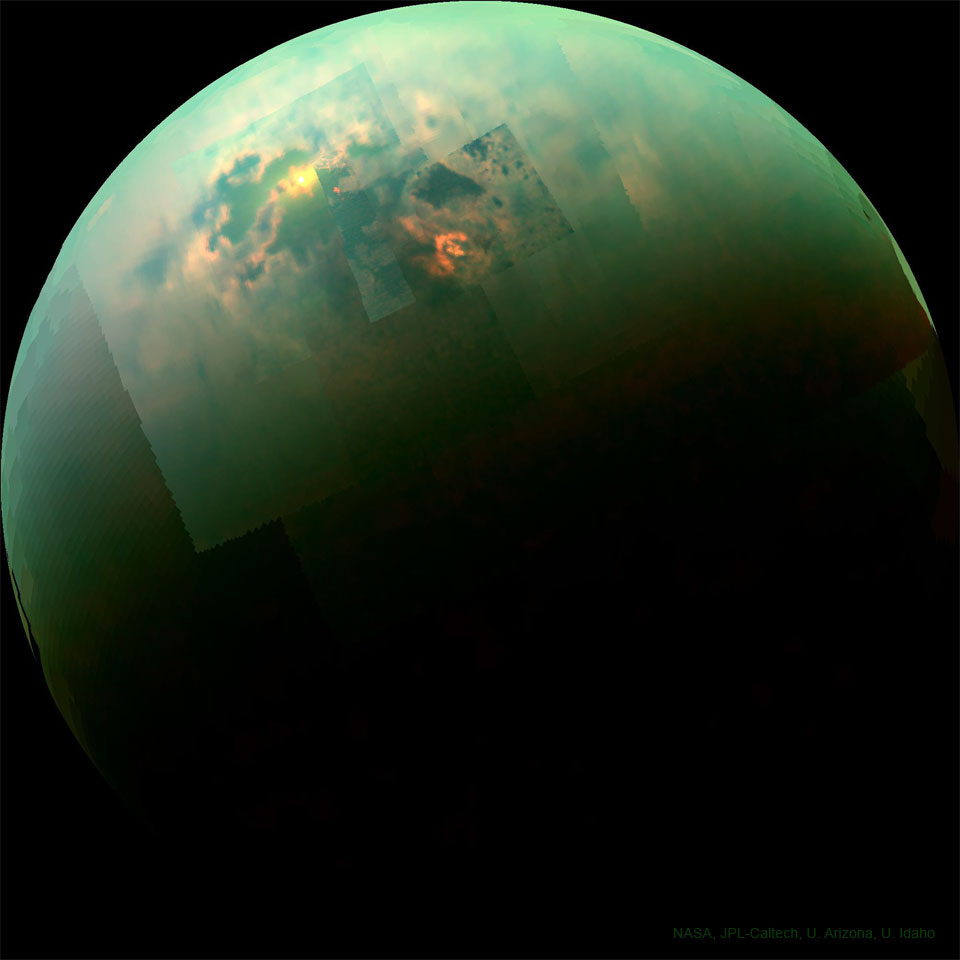
2022年3月27日 Titan Seas Reflect Sunlight Image Credit: NASA, JPL-Caltech, U. Arizona, U. Idaho Explanation: Why would the surface of Titan light up with a blinding flash? The reason: a sunglint from liquid seas. Saturn’s moon Titan has numerous smooth lakes of methane that, when the angle is rig

NASA·每日一图

纪念有远见的太阳物理学家尤金·帕克

Dr. Eugene N. Parker, visionary of heliophysics and namesake of NASA’s Parker Solar Probe, has passed away. He was 94. As a young professor at the University of Chicago in the mid-1950s, Parker developed a mathematical theory that predicted the solar wind, the constant outflow of solar material from

滚动至顶部