2025年7月28日
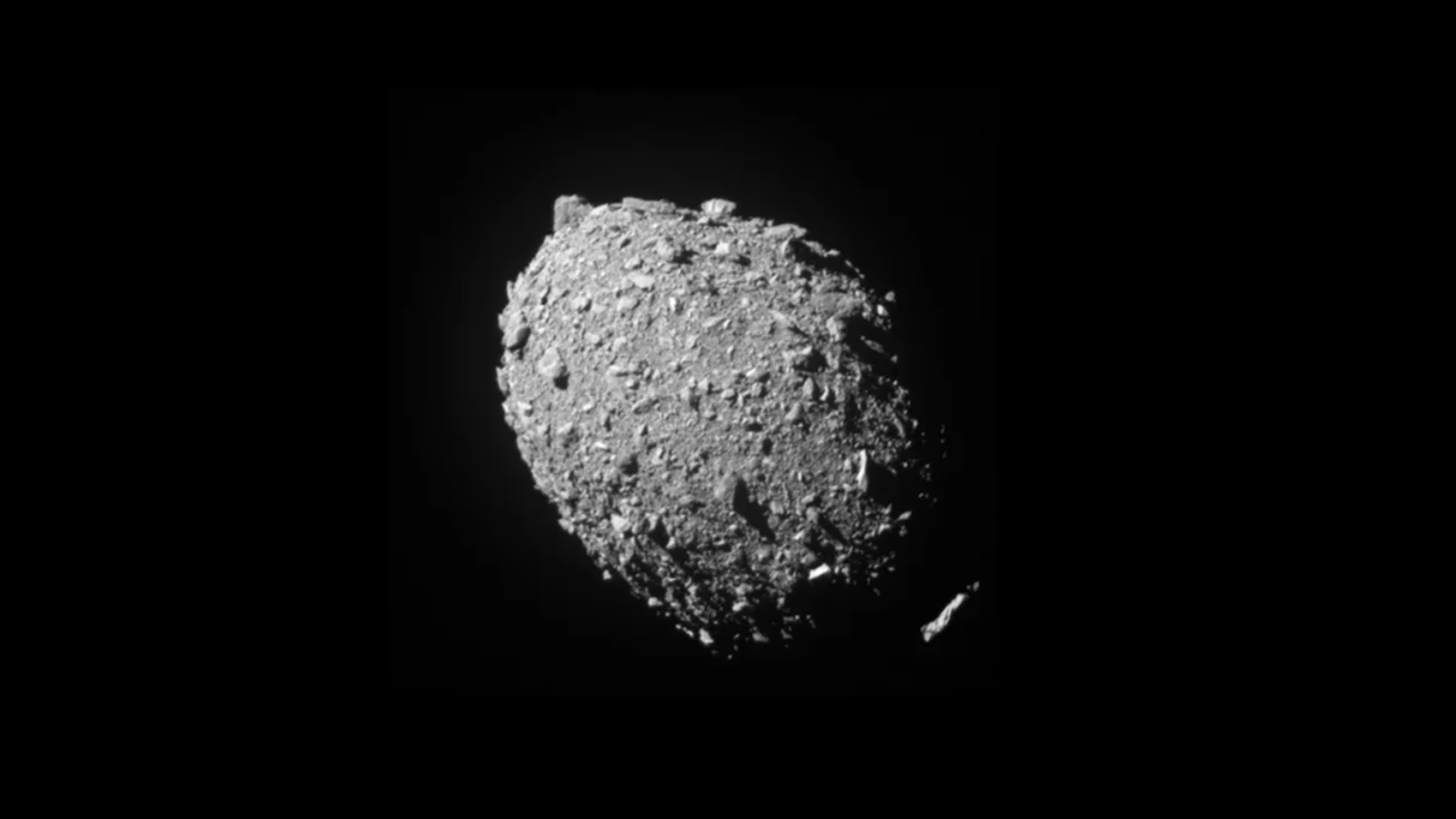
Collision at Asteroid Dimorphos
Video Credit: ASI NASA, Johns Hopkins APL, DART, LICIACube, LUKE, IOP
Explanation: Why was this collision so strange? In 2022, to develop Earth-saving technology, NASA deliberately crashed the DART spacecraft into the asteroid moonlet Dimorphos. The hope was that this collision would alter the trajectory of Dimorphos around its parent asteroid Didymos and so demonstrate that similar collisions could, in theory, save the Earth from being hit by (other) hazardous asteroids. But analyses of new results show that the effects of the collision are different than expected — and we are trying to understand why. Featured here is the time lapse video taken by the ejected LICIACube camera LUKE showing about 250 seconds of the expanding debris field of Dimorphos after the collision, with un-impacted Didymos passing in the foreground. In 2026, Europe’s Hera mission will reach the asteroids and release three spacecraft to better study the matter.
Tomorrow’s picture: eye sky
撞击双卫一
影片提供: ASI NASA, Johns Hopkins APL, DART, LICIACube, LUKE, IOP
说明: 为什么这例碰撞如此奇特?在2022年,NASA为发展地球防御技术,使用飞镖(Double Asteroid Redirection Test, DART)探测器主动撞击近地小行星中的卫星双卫一(Dimorphos)。此任务的主要目标,是希望藉由撞击改变双卫一绕行母小行星双生星(Didymos)的轨道周期,进而验证偏转技术用于未来小行星撞击防御任务中的可行性。然而,后续观测与资料分析显示,撞击所造成效应,与任务团队原先的预期有差异,显示其背后涉及更为复杂的物质结构与碎屑动力学过程。这部由撞击前布署的轻型意大利小行星成像立方卫星(LICIACube)之LUKE相机所拍摄的缩时影片,记录了双卫一被撞击后约250秒内,碎片团扩张的过程,并可见到未受撞击的双生星从影像的前景掠过。于2026年,欧洲空间局(ESA)的赫拉号(Hera) 任务将布署三枚探测器,仔细探索受到撞击后的双卫一,以确认小行星动能撞击转向技术的可行性,及探测双生星系统,从而增进人类对小行星的了解。
明日的图片: eye sky