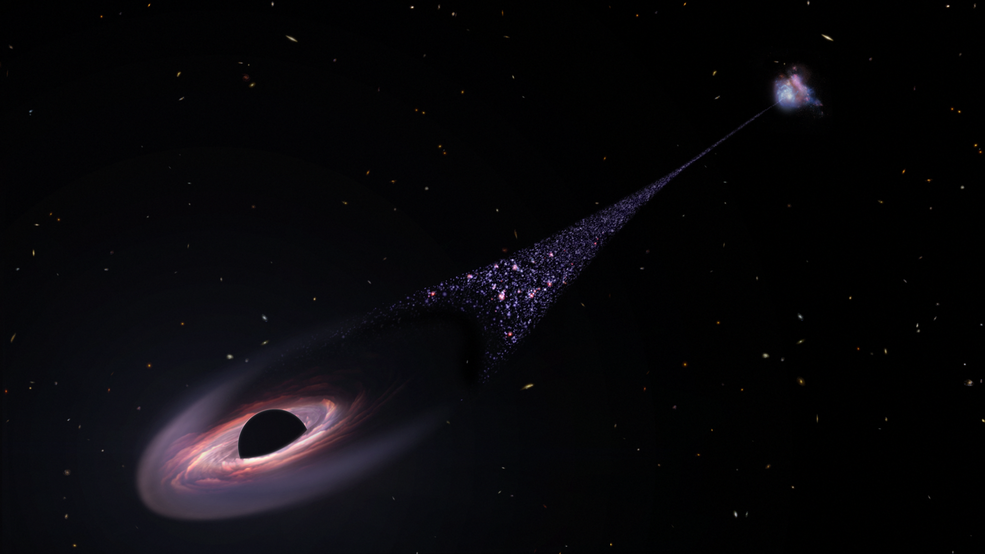
詹姆斯·韦伯望远镜显示,早期宇宙伴随着恒星形成的爆发而破裂
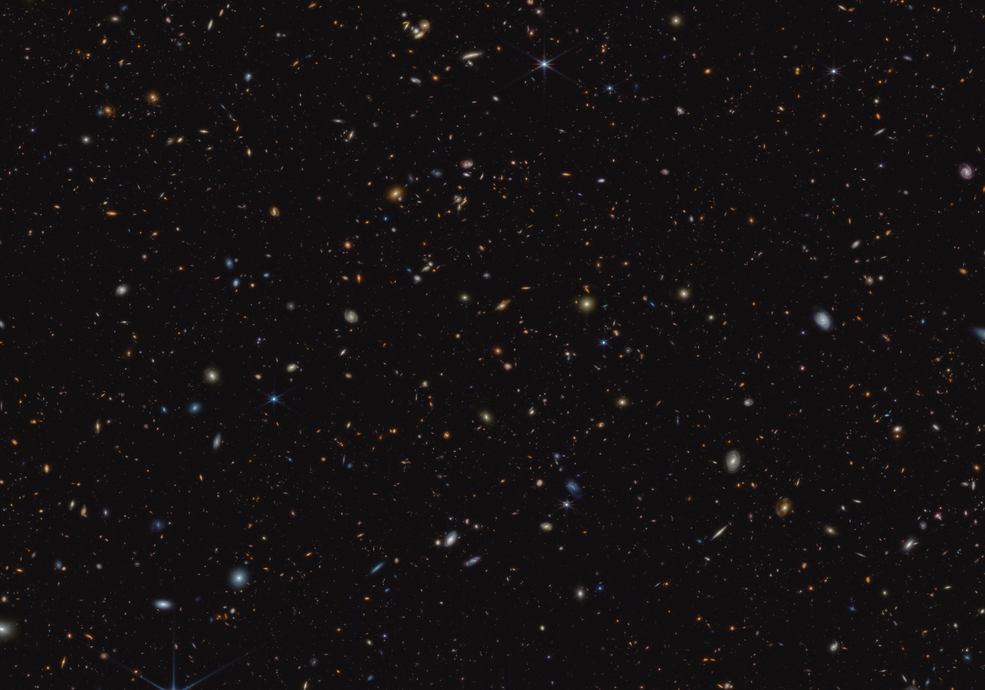
天文学中最基本的问题之一是:第一批恒星和星系是如何形成的?NASA的詹姆斯·韦伯太空望远镜已经为这个问题提供了新的见解。
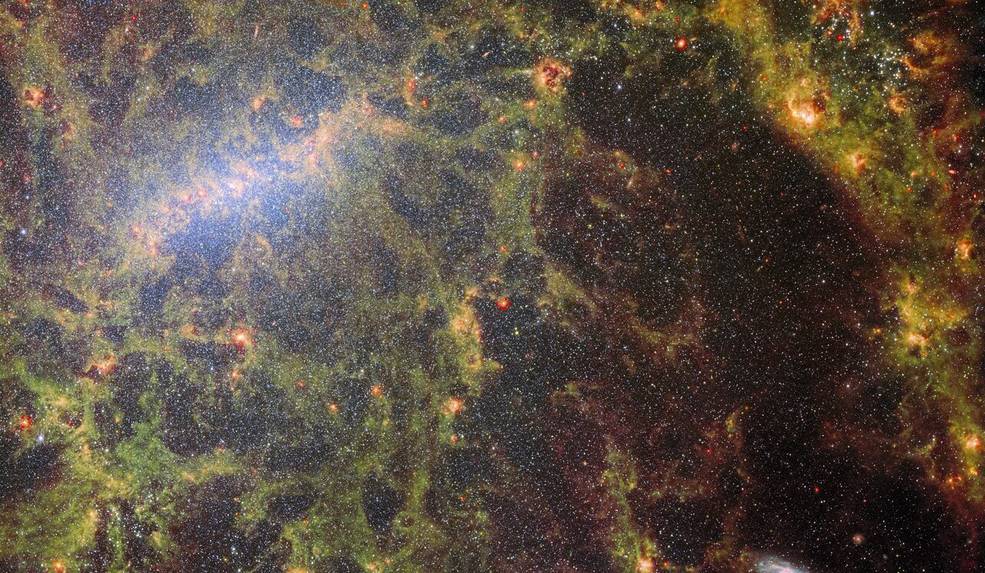
詹姆斯·韦伯太空望远镜拍摄的这张照片上,尘埃和明亮的星团交织在一起。明亮的气体和恒星卷须属于棒旋星系NGC 5068,在这张图片的左上角可以看到它明亮的中央棒状结构——这是由韦伯两台仪器所合成。

在梅西耶84星系(M84)的热气中有一个“H”形结构。来自银河系中心超大质量黑洞的喷流在高温下产生了相反方向的空洞。NASA钱德拉X射线天文台的X射线数据(以粉红色显示)与VLA的无线电数据(以蓝色显示)相结合,显示了这一点。

This new image from NASA’s Hubble Space Telescope shows interacting galaxies known as AM 1214-255. These galaxies contain active galactic nuclei, or AGNs. An AGN is an extraordinarily luminous central region of a galaxy. Its extreme brightness is caused by matter whirling into a supermassive black h

A menagerie of interesting astronomical finds are visible in this image from the NASA/ESA Hubble Space Telescope. In addition to several large elliptical galaxies, a ring-shaped galaxy is lurking on the right of the image. A pair of bright stars are also visible at the left of the image, notable for

NASA的詹姆斯·韦伯太空望远镜已经开始揭示宇宙历史上迄今为止遥不可及的形成时期:星系的形成和聚集。天文学家称之为红移7.9的距离,即大爆炸后仅6.5亿年,首次证实了由七个星系组成的原星团。

This view of the Antennae Galaxies, two large galaxies colliding 60 million light-years away, is one of the first research images from the Super Pressure Balloon Imaging Telescope (SuperBIT) that launched on a scientific super pressure balloon April 16, 2023 (local time New Zealand). This image and

在NASA的詹姆斯·韦伯太空望远镜拍摄的这张照片中,Arp 220就像一座闪耀在星系海洋中的辉煌灯塔,照亮了夜空。实际上,两个螺旋星系在合并的过程中,Arp 220发出最亮的红外光,这使得它成为韦伯的理想目标。

This image taken with the NASA/ESA Hubble Space Telescope shows JO204, a ‘jellyfish galaxy’ so named for the bright tendrils of gas that appear in this image as drifting lazily below JO204’s bright central bulk. The galaxy lies almost 600 million light-years away in the constellation Sextans. Hubble