Galaxies

NASA·每日一图

哈勃望远镜瞥见一对星系二人组

Two enormous galaxies capture your attention in this spectacular image taken with the NASA/ESA Hubble Space Telescope using the Wide Field Camera 3 (WFC3). The galaxy on the left is a lenticular galaxy, named 2MASX J03193743+4137580. The side-on spiral galaxy on the right is more simply named UGC 26 […]

NASA·每日一图

哈勃拍摄到一个迷人的螺旋星系

This image shows the spiral galaxy NGC 5037, in the constellation of Virgo. First documented by William Herschel in 1785, the galaxy lies about 150 million light-years away from Earth. Despite this distance, we can see the delicate structures of gas and dust within the galaxy in extraordinary detail

资讯

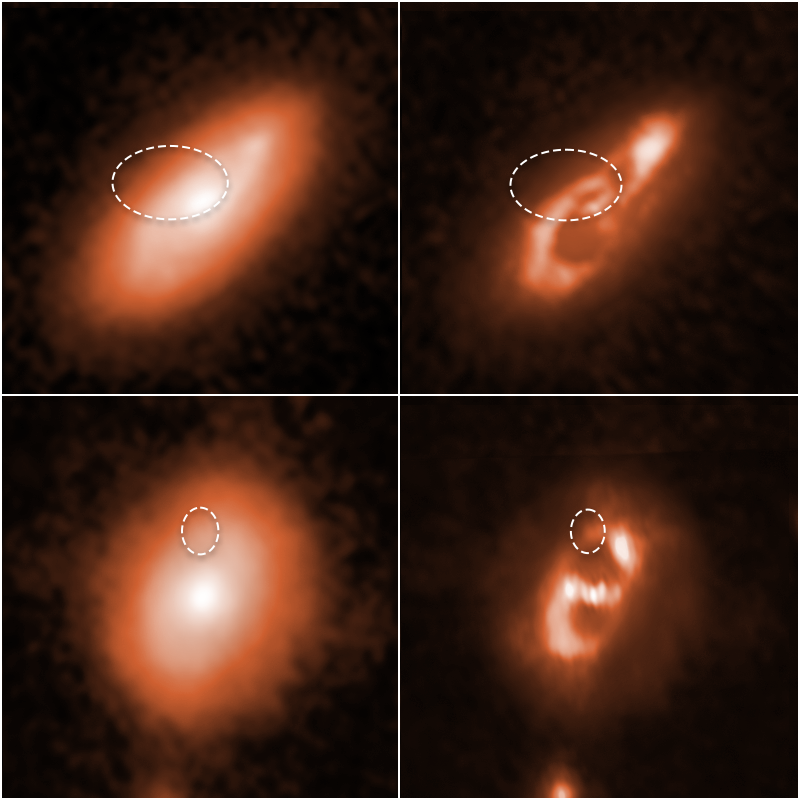
哈勃太空望远镜追踪到星系旋臂的快速射电爆发

天文学家利用美国宇航局(NASA)的哈勃太空望远镜追踪了五个遥远星系螺旋臂上五次短暂而强大的射电爆发的位置。 这些被称为快速射电风暴(FRBs)的异常事件在千分之一秒内产生的能量相当于太阳一年产生的能量。由于这些短暂的无线电脉冲在眨眼之间就消失了,研究人员很难追踪到它们的来源,更不用说确定是什么或哪些物体造成了它们。因此,大多数时候,天文学家并不知道确切的观测地点。 天文学家利用哈勃太空望远镜追踪到上图中两个星系的旋臂处有两次短暂而强大的射电爆发。左边的两张图片展示了哈勃望远镜拍摄的每个星系的完整快照。右边的两张数字增强图像更详细地展示了每个星系的螺旋结构。这些射电爆发的目录名称是FRB 19

NASA·每日一图

观察早期宇宙中的恒星

This June 2020 image from the Hubble Space Telescope shows the galaxy cluster MACS J0416. This is one of six galaxy clusters being studied by the Hubble Frontier Fields program, which produced the deepest images of gravitational lensing ever made. Scientists used intracluster light (visible in blue)

NASA·每日一图

哈勃凝视着充满宇宙线索的星团

This detailed image features Abell 3827, a galaxy cluster that offers a wealth of exciting possibilities for study. Hubble observed it in order to study dark matter, which is one of the greatest puzzles cosmologists face today. The science team used Hubble’s Advanced Camera for Surveys and Wide Fiel

资讯

天文学家发布了新的银河系外围的全天空地图

银河系和大麦哲伦云(LMC)的图像叠加在周围星系晕的地图上。较小的结构是LMC通过这一区域时产生的尾迹。较大的浅蓝色特征对应于我们银河系北半球观测到的高密度恒星。 影像来源:美国宇航局/欧洲航天局/喷气实验室-加州理工学院/康罗伊等 新星图的亮点是由一个即将与银河系相撞的小星系引起的恒星尾流。该地图还可以为暗物质理论提供新的检验。 天文学家利用NASA和欧空局(European Space Agency)望远镜的数据,发布了一张我们银河系最外层区域的新的全天空地图。这个区域被称为银晕,位于形成银河系可辨认的中央盘的旋流旋臂之外,恒星稀少。尽管银晕可能看起来大部分是空的,但也有人预测它含有大量的

NASA·每日一图

哈勃望远镜:30年,还在继续

It’s March 2021 and in about another month the Hubble Space Telescope will celebrate 31 years in space observing the universe. In this image celebrating Hubble’s 30th birthday, the giant red nebula (NGC 2014) and its smaller blue neighbor (NGC 2020) are part of a vast star-forming region

滚动至顶部