

螺旋星云的深场影像
A nearly circular nebula with a blue core surrounded by small white knots, an orange ring and expansive red strucures. Please see the explanation for more detailed information.
一个近乎圆形的星云,其蓝色核心周围环绕着白色小结节,橙色环状结构和膨胀的红色结构。有关更多详细信息,请参阅说明。

See Explanation. Clicking on the picture will download the highest resolution version available.
请参阅说明。单击图片将下载可用的最高分辨率版本。

2023年5月7日 The Helix Nebula from CFHT Image Credit: CFHT, Coelum, MegaCam, J.-C. Cuillandre (CFHT) & G. A. Anselmi (Coelum) Explanation: Will our Sun look like this one day? The Helix Nebula is one of brightest and closest examples of a planetary nebula, a gas cloud created at the end of the lif

2022年12月28日 Messier 88 Image Credit & Copyright: Adam Block, Mt. Lemmon SkyCenter, U. Arizona Explanation: Charles Messier described the 88th entry in his 18th century catalog of Nebulae and Star Clusters as a spiral nebula without stars. Of course the gorgeous M88 is now understood to be a gal
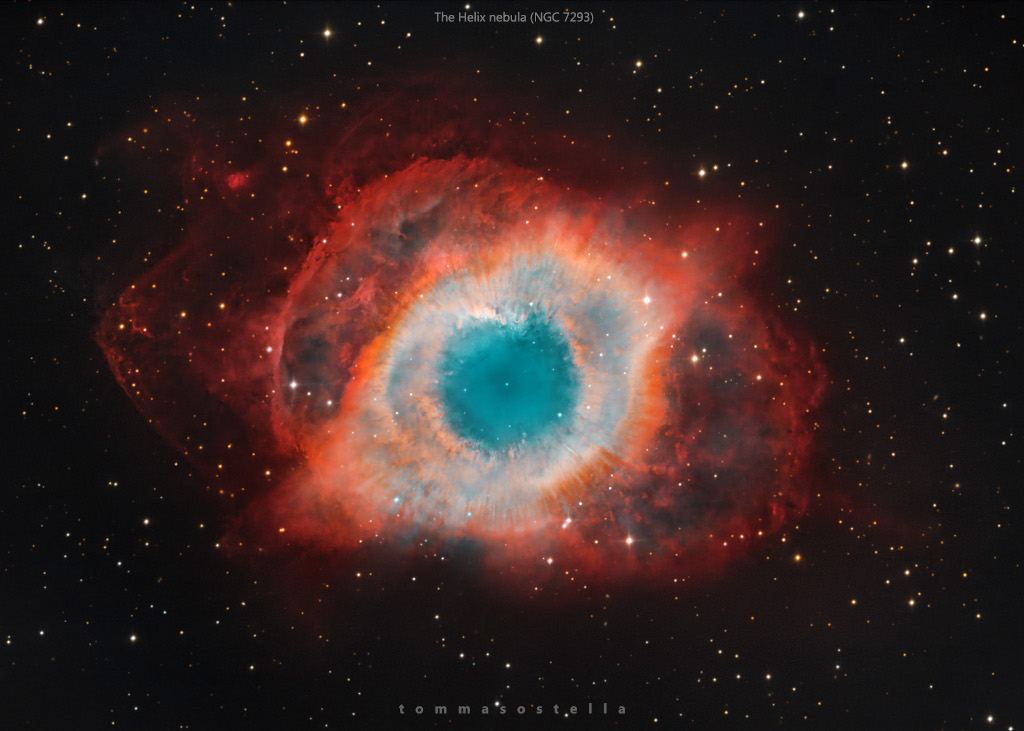
2022年12月7日 NGC 7293: The Helix Nebula Image Credit & Copyright: Tommaso Stella Explanation: A mere seven hundred light years from Earth, toward the constellation Aquarius, a sun-like star is dying. The dying star’s last few thousand years have produced the Helix Nebula (NGC 7293), a well
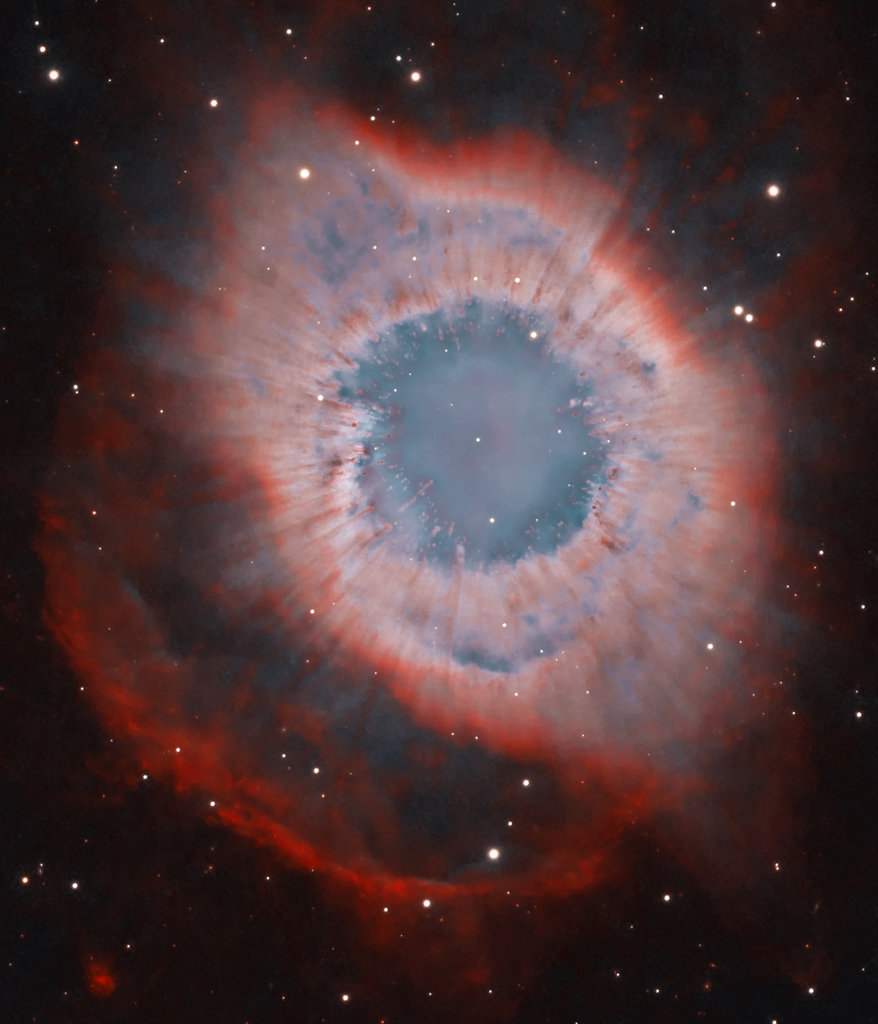
2021年10月14日 NGC 7293: The Helix Nebula Image Credit & Copyright: Ignacio Diaz Bobillo Explanation: A mere seven hundred light years from Earth, toward the constellation Aquarius, a sun-like star is dying. Its last few thousand years have produced the Helix Nebula (NGC 7293), a well studied and

2020年11月24日 The Helix Nebula from CFHT Image Credit & Copyright: CFHT, Coelum, MegaCam, J.-C. Cuillandre (CFHT) & G. A. Anselmi (Coelum) Explanation: Will our Sun look like this one day? The Helix Nebula is one of brightest and closest examples of a planetary nebula, a gas cloud created at

2020年8月23日 The Helix Nebula from Blanco and Hubble Image Credit: C. R. O’Dell, (Vanderbilt) et al. ESA, NOAO, NASA Explanation: How did a star create the Helix nebula? The shapes of planetary nebula like the Helix are important because they likely hold clues to how stars like the Sun end their